Hydro Jetting in Merced: When Snaking a Drain Isn't Enough
Drain keeps clogging after snaking? Learn when hydro jetting in Merced is the better fix.
Summarize with AI

You had the drain snaked last month, and now it is slow again. That cycle is frustrating, and it usually means the real problem was never fully cleared. Hydro jetting in Merced is often the next step when a standard drain snake only buys you a few weeks.
At Dutchman Drains & Plumbing, we serve homes, businesses, and dairies across Merced and Stanislaus counties from our Atwater and Ceres locations. Repeat clogs are one of the most common reasons people call us.
Below, we explain the difference between snaking and jetting, the signs you need more than a snake, and what to expect during a jetting service.
Snaking vs. Hydro Jetting: What Each One Does
Both methods clear clogs, but they work in very different ways. Understanding the difference explains why one sometimes fails where the other succeeds.
How a Drain Snake Works
A snake, also called an auger, is a flexible steel cable fed into the pipe. Its tip bores through the blockage and breaks it apart so water can flow again. Snaking is great for punching through a single clog, like a wad of hair or a stuck object.
However, a snake only opens a path through the middle of the pipe. Grease, sludge, and buildup clinging to the pipe walls often stay right where they were. Over time, that leftover buildup catches new debris, and the clog comes back.
How Hydro Jetting Works
Hydro jetting sends a high pressure stream of water through a specialized hose and nozzle. The nozzle sprays water forward to break up blockages and backward to scour the inside of the pipe. As a result, jetting cleans the full width of the pipe instead of just opening a hole through the clog.
Think of it this way: a snake clears a path, while jetting cleans the whole hallway.
Signs Snaking Isn't Enough
A single clog that clears and stays clear probably does not need jetting. The picture changes when the same problem keeps returning. Watch for these signs:
- The same drain clogs again soon after snaking. That usually means buildup on the pipe walls was left behind.
- Several drains back up at once. When multiple fixtures slow down together, the problem is often deeper in the main line.
- Gurgling sounds or sewer odors coming from drains or toilets.
- Slow drains throughout the house rather than in one sink or tub.
- Grease heavy kitchen lines in restaurants, commercial kitchens, or busy households.
- Tree roots found during a previous drain service or camera inspection.
Why It Matters Around Merced
Many older neighborhoods in the area have mature trees growing close to sewer lines. Roots are drawn to moisture and can work their way into small gaps in older pipes. A snake can cut a path through them, but jetting does a more thorough job of clearing them out.
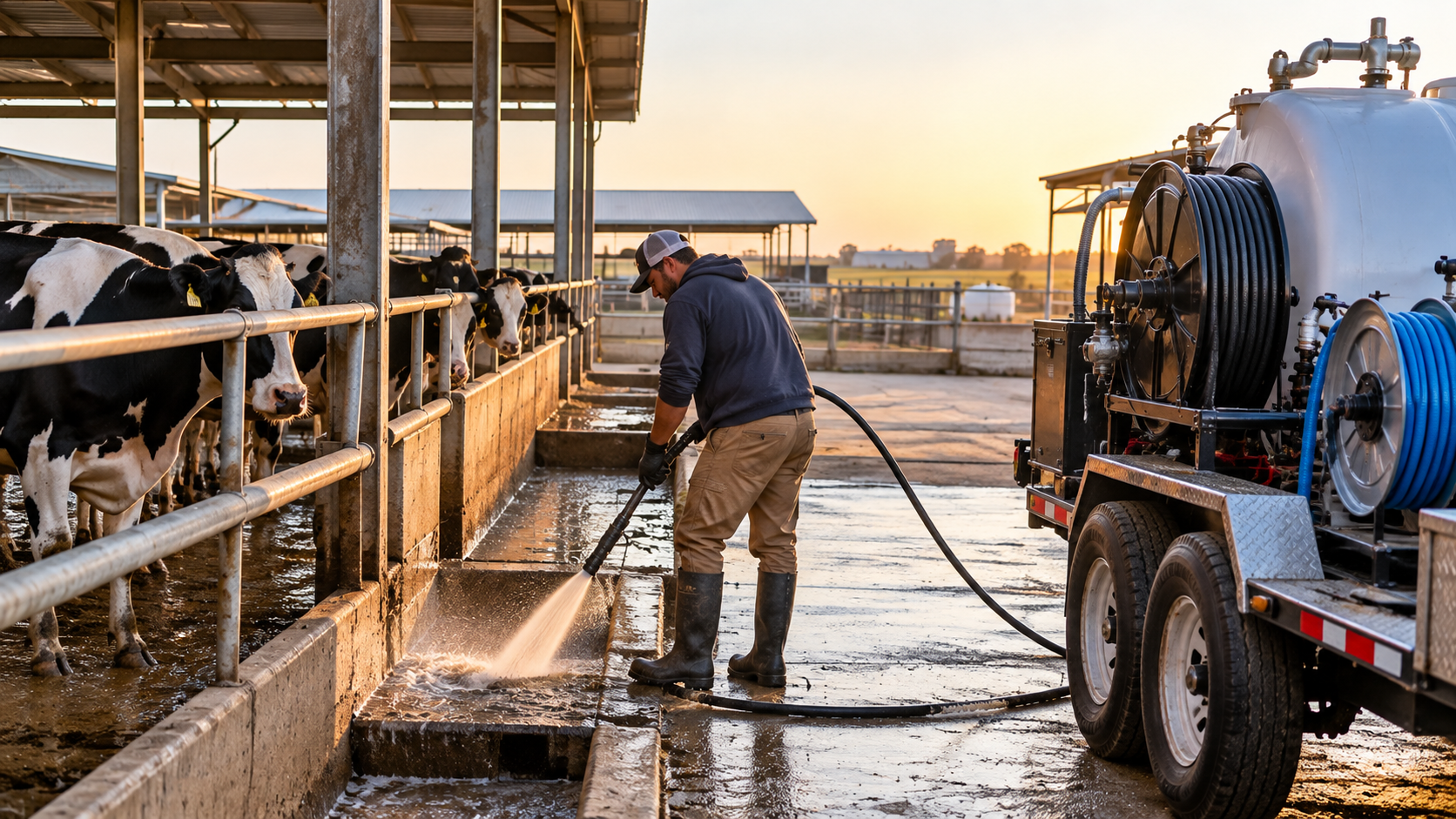
Commercial and dairy operations face a different challenge. Heavy use, grease, and organic waste can coat lines quickly. For those systems, jetting is often part of a regular maintenance plan rather than a one time fix.
What to Expect During a Hydro Jetting Service
A good jetting job is planned, not rushed. Here is the general flow of a typical service call:
- Find out what is going on. The technician asks about symptoms and which drains are affected.
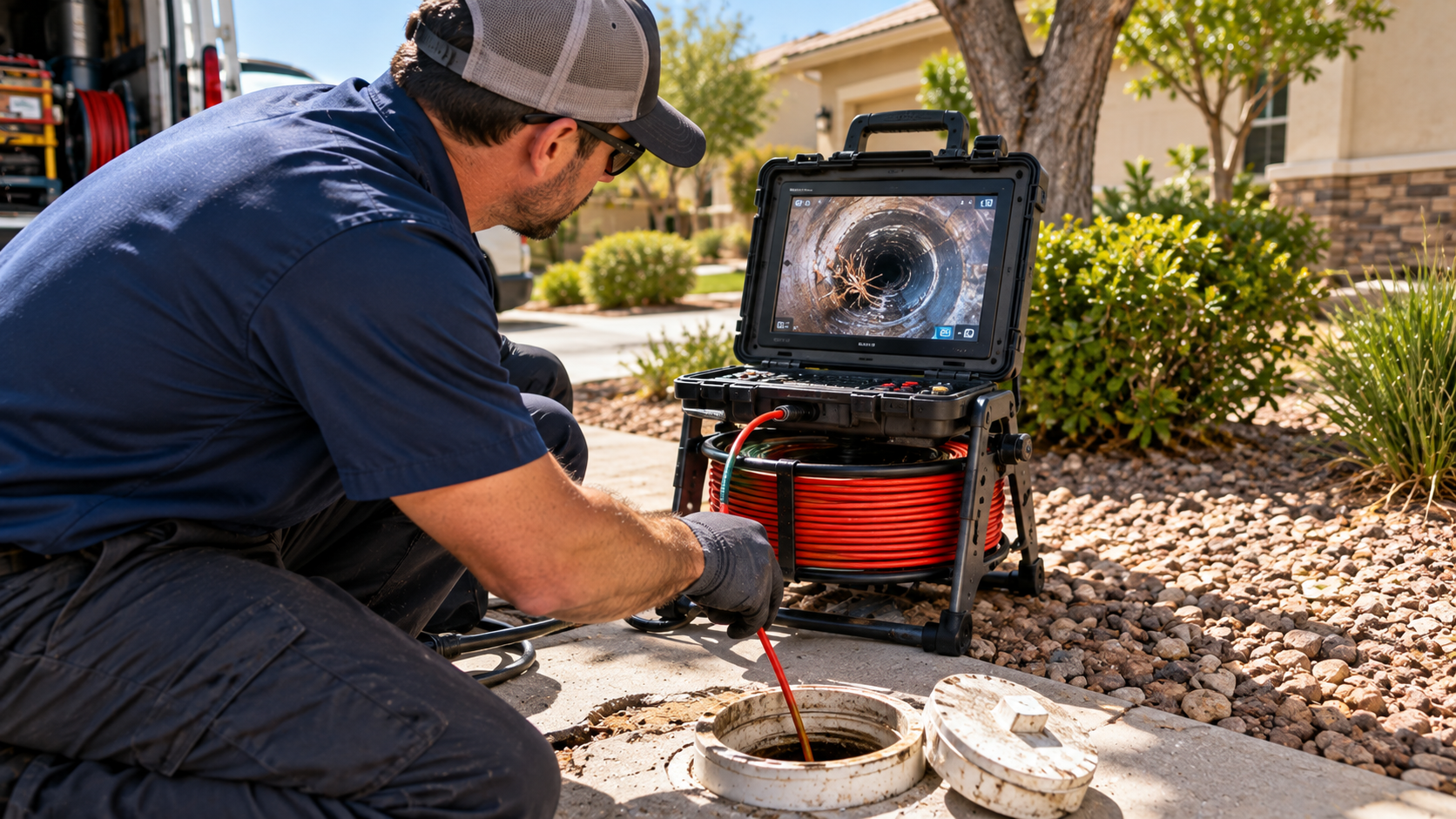
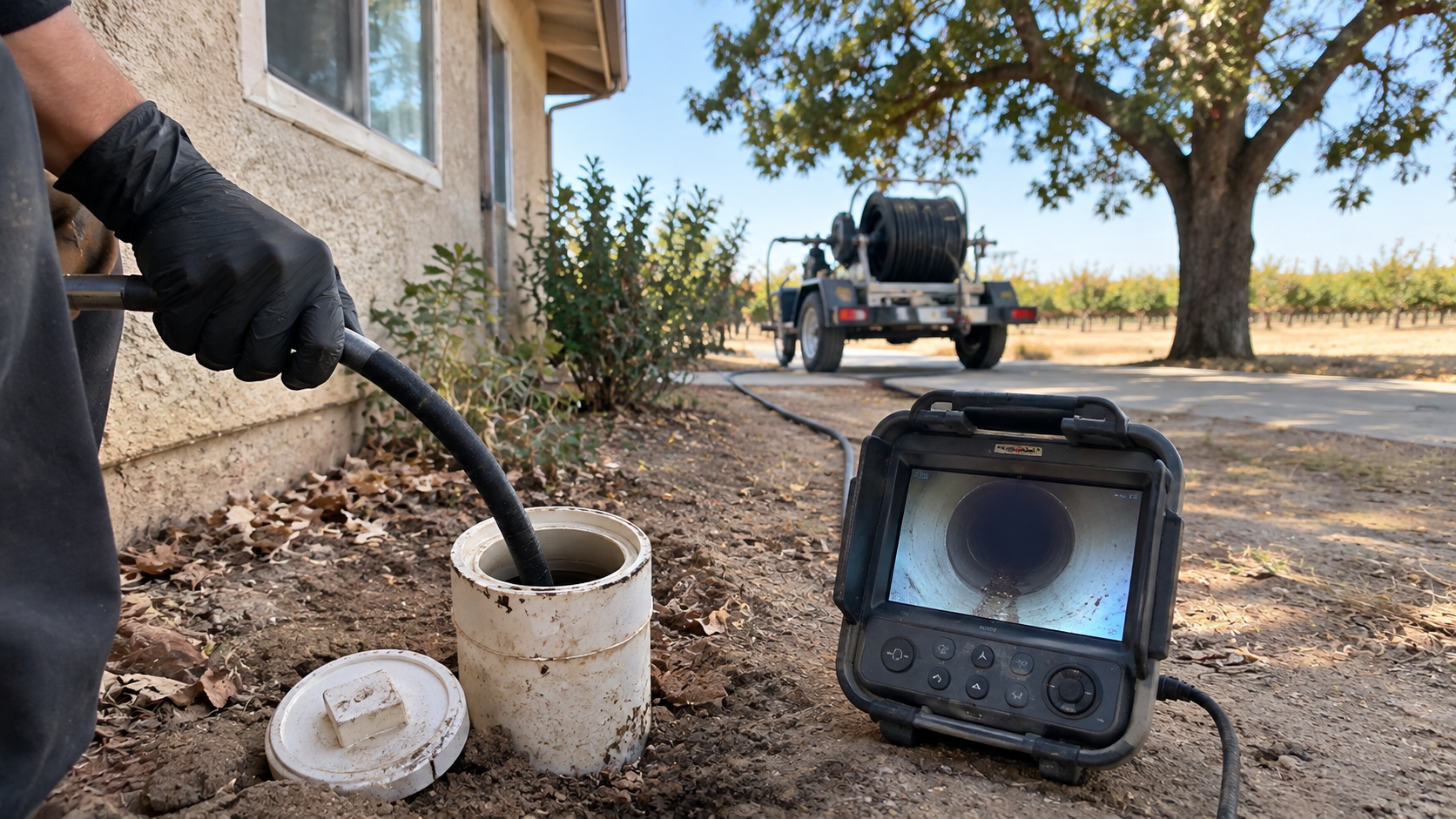
- Look inside the line. A sewer camera shows the type of blockage and the condition of the pipe.
- Choose the right access point, usually a cleanout on the main line.
- Jet the line, working the nozzle through the pipe to break up and flush out the buildup.
- Check the results. A follow up camera look confirms the line is clean and flowing.
Why the Camera Comes First
Jetting is powerful, so it helps to know what you are dealing with before starting. A camera inspection can reveal cracks, collapsed sections, or badly damaged pipe that needs repair instead. Seeing inside the line first protects your plumbing and keeps you from paying for the wrong fix.
To learn more about what a camera can find, read our post on sewer camera inspection in Merced.
Is Hydro Jetting Safe for Your Pipes?
This is one of the first questions homeowners ask. For pipes in reasonable condition, jetting is a safe and effective way to clean them. The key is having a trained technician who adjusts the approach to the pipe material and condition.
Older or damaged lines are a different story. If a pipe is already cracked, crushed, or badly corroded, jetting could make an existing weakness worse. That is exactly why we look inside the line before we start.
A Common Misconception
Some people believe chemical drain cleaners do the same job as jetting. In reality, store bought chemicals tend to work on the surface of a clog and can be harsh on older pipes. They rarely remove buildup along the full length of the line, so the clog often returns.
Keeping Drains Clear After Jetting
Once your lines are clean, a few habits help them stay that way:
- Keep cooking grease and oil out of the kitchen sink.
- Use drain screens to catch hair and food scraps.
- Flush only toilet paper, even if wipes say they are flushable.
- Pay attention to early warning signs like gurgling or slow drains.
For homes with roots or heavy use, scheduled maintenance can keep problems from building back up. We can talk through what makes sense for your property.
Frequently Asked Questions
What is the difference between hydro jetting and snaking a drain?
A snake bores a path through a clog, while hydro jetting uses high pressure water to scour the entire inside of the pipe. Snaking works well for a single blockage. Jetting is better when grease, sludge, or roots keep causing repeat clogs.
How do I know if I need hydro jetting?
Repeat clogs after snaking, several drains backing up at once, and gurgling or sewer odors are common signs. Tree roots found during a camera inspection are another. A technician can confirm whether jetting is the right fix.
Is hydro jetting safe for older pipes?
It is generally safe for pipes in reasonable condition. Older or damaged lines need a closer look first, which is why we recommend a camera inspection before jetting. That way, any cracks or weak spots are found before work begins.
Can hydro jetting remove tree roots?
Jetting can clear roots that have grown into a sewer line and flush them out of the pipe. However, roots often enter through a crack or joint that may still need repair. A camera inspection helps decide whether jetting alone is enough.
Do you offer hydro jetting for commercial and dairy properties?
Yes. Dutchman Drains & Plumbing works with commercial and dairy operations as well as homes. These properties often benefit from jetting as part of ongoing maintenance.
What areas do you serve?
We serve Merced and Stanislaus counties from our locations in Atwater and Ceres. That includes Merced, Modesto, Turlock, Livingston, Chowchilla, and nearby communities.
If you are tired of calling for the same clog over and over, it may be time to clean the line properly instead of poking another hole through it. Dutchman Drains & Plumbing can look inside your pipes and recommend the right fix for your home or business. Book a consultation today, and we will help you get your drains flowing freely for the long haul.

Read our latest blog & articles