Is Merced's Tap Water Safe? A Homeowner's Guide to Water Filtration & Hard Water in the Central Valley
Merced's hard water affects your pipes, appliances, and wallet. Here's what to know and what to do.
Summarize with AI
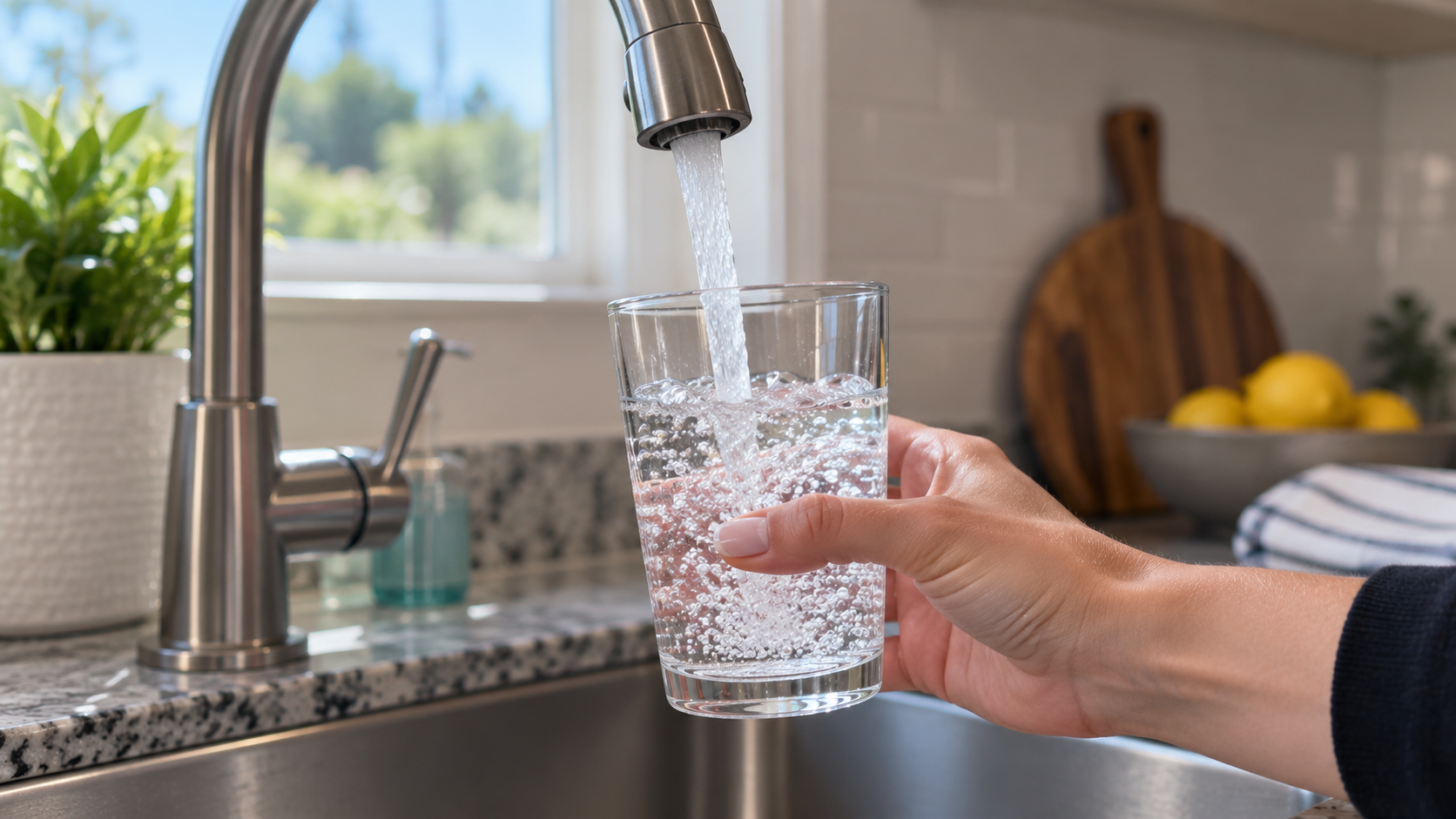

If you have ever noticed white buildup around your faucets, dry skin after a shower, or a faint smell coming from the tap, you are not imagining things. Merced's water supply has real quirks that affect homeowners in ways most people do not fully understand until they start looking into it. Dutchman Drains & Plumbing has been serving Merced and the Central Valley for over 20 years, and questions about tap water quality and water filtration come up constantly. This guide covers what is actually in Merced's water, what that means for your home, and what your options are for addressing it.
Where Does Merced's Water Come From?
Merced's municipal water supply is sourced primarily from groundwater wells drawing from the San Joaquin Valley aquifer system. This is common throughout the Central Valley, and it comes with a specific set of water quality characteristics that differ noticeably from surface water supplies used in other parts of California.
Groundwater in this region moves slowly through mineral-rich soils and rock formations. By the time it reaches a well, it carries dissolved minerals, primarily calcium and magnesium, at levels that classify it as hard to very hard water by most standards. It can also carry naturally occurring compounds like arsenic, nitrates, and manganese depending on the specific aquifer and the depth of the well.
The City of Merced treats municipal water before it reaches your tap. That treatment removes or reduces many contaminants. But treatment does not change the mineral content that causes hardness, and it does not eliminate all potential concerns.
Is Merced's Tap Water Safe to Drink?
The City of Merced publishes an annual Consumer Confidence Report (also called a Water Quality Report), which details what is in the water supply and how it compares to state and federal drinking water standards. In general, Merced's treated municipal water meets legal safety requirements.
That said, "meets legal standards" and "has nothing in it worth knowing about" are two different things. A few items worth understanding as a Merced homeowner:
Arsenic. Naturally occurring arsenic is present in many San Joaquin Valley groundwater sources. The federal maximum contaminant level (MCL) for arsenic in drinking water is 10 parts per billion. Merced's water typically falls within this legal limit, but some homeowners prefer additional filtration for arsenic given the ongoing scientific discussion about long-term low-level exposure.
Nitrates. Agricultural activity throughout the Central Valley has contributed to elevated nitrate levels in groundwater over decades. Nitrates are a concern primarily for infants under six months and for pregnant women. Municipal treatment addresses nitrates, but well owners in rural Merced County areas should test their private wells regularly, as these are not subject to municipal treatment.
Disinfection byproducts. Merced uses chlorine or chloramine to disinfect the water supply. These disinfectants do their job, but they can react with naturally occurring organic matter to form byproducts such as trihalomethanes (THMs). These are regulated and kept within legal limits, but they are the source of the taste and odor complaints that are common in Central Valley tap water.
Private wells. If your property uses a private well rather than a municipal connection, none of the city's treatment applies to your water. Private well owners in Merced County should test their water annually for nitrates, coliform bacteria, arsenic, and other area-relevant contaminants.
The Hard Water Problem in Merced
Hard water is the issue that affects Merced homeowners most visibly and most consistently. The Central Valley has some of the hardest water in California, and Merced is squarely in that zone.
Water hardness is measured in grains per gallon (GPG) or milligrams per liter (mg/L). Water above 7 GPG is generally considered hard. Many Merced area homes see water hardness in the range of 10 to 20 GPG or higher depending on their specific source and location. That is the range where the effects become noticeable and costly.
What Hard Water Does to Your Home
Scale buildup in pipes and appliances. As hard water heats up, dissolved calcium carbonate precipitates out and adheres to surfaces. Inside water heaters, this forms a layer of scale that acts as insulation between the heating element and the water. A water heater that has significant scale buildup has to work harder and longer to heat the same amount of water. That means higher energy bills and a shorter appliance lifespan.
Fixtures and faucets. That chalky white residue around your faucet aerators, showerheads, and drain surrounds is calcium carbonate scale. Left alone, it restricts water flow and is genuinely difficult to remove once it hardens.
Dishwashers and washing machines. Scale accumulates on the interior components of these appliances over time, reducing efficiency and shortening their useful life. Dishes may come out of the dishwasher with spots or a cloudy film. Laundry washed in hard water may feel stiff, and fabrics can wear out faster.
Skin and hair. Hard water does not rinse soap and shampoo as effectively as soft water. The result is a film that stays on skin and hair after showering, which is why hard water areas are often associated with dryness and irritation.
Soap efficiency. Hard water reacts with soap to form soap scum rather than lather. This means using more soap, more shampoo, and more dish detergent to achieve the same result as you would in a soft water environment.
Water Filtration Options for Merced Homeowners
There is no single solution that addresses every water quality concern, because the right answer depends on what you are actually trying to solve. Here is a breakdown of the main options and what each one does.
Whole-House Water Softeners
A water softener addresses hard water by removing calcium and magnesium ions through a process called ion exchange. Hard water passes through a resin tank filled with sodium-charged beads. The calcium and magnesium ions swap places with sodium ions, and the water leaving the tank is soft.
This is the most effective solution for protecting pipes, appliances, and fixtures from scale buildup. It also improves the soap-lathering experience noticeably.
A water softener does not filter out contaminants like arsenic, nitrates, or chlorine byproducts. It addresses hardness specifically. For homeowners whose primary concern is appliance protection and the day-to-day effects of hard water, a softener handles the problem well.
Whole-House Water Filtration Systems
A whole-house filter (also called a point-of-entry system) treats all the water entering the home before it reaches any fixture. Depending on the type of filter media used, these systems can reduce chlorine, chloramines, sediment, certain heavy metals, and other contaminants.
Common media types include activated carbon, which is particularly effective for taste and odor issues from chlorine and chloramines, and KDF media, which addresses heavy metals and inhibits bacterial growth in the filter housing.
A whole-house filter works well in combination with a water softener. The filter handles taste, odor, and chemical concerns, while the softener handles hardness. Many Merced homeowners who invest in water treatment end up with both.
Reverse Osmosis Systems
Reverse osmosis (RO) is a point-of-use technology typically installed under the kitchen sink. It pushes water through a semipermeable membrane that filters out a wide range of contaminants, including arsenic, nitrates, lead, fluoride, dissolved solids, and most other impurities at the molecular level.
The result is very clean, very pure water at the kitchen tap and, if connected to the refrigerator line, at the ice maker and water dispenser as well.
RO systems do not treat the whole house. They address drinking and cooking water specifically. For homeowners who want the highest quality water for consumption and are comfortable with hard water in the rest of the home, an RO system under the kitchen sink is an efficient and relatively affordable solution.
RO waste water is also something to be aware of. Traditional RO systems produce a ratio of wastewater to filtered water, though newer high-efficiency models have reduced this significantly.
UV Purification Systems
Ultraviolet purification uses UV light to neutralize bacteria, viruses, and other microorganisms in the water supply. It does not remove dissolved minerals, chemicals, or sediment, but it is highly effective against biological contaminants.
UV systems are most relevant for private well owners in Merced County who may be concerned about bacterial contamination from agricultural runoff or aging well infrastructure. They are often installed in combination with a sediment pre-filter and a carbon filter for a more complete treatment approach.
Signs Your Merced Home May Benefit from Water Treatment
Not every home needs every type of system. These are the most common signs that something in your water supply is worth addressing.
White crusty buildup on faucets, showerheads, or around drains. This is calcium scale from hard water and will continue to worsen over time.
Spots on dishes after the dishwasher cycle. Cloudy or spotted glassware is a classic hard water indicator.
A chlorine taste or chemical smell from the tap. This points to chlorine or chloramine levels that, while within legal limits, are noticeable. An activated carbon filter addresses this effectively.
Dry skin or hair after showering despite regular moisturizing. Hard water leaves a mineral film that interferes with how well skin and hair hold moisture.
A water heater that runs longer or costs more to operate than it used to. Scale buildup inside the tank is a likely contributor.
Laundry that feels stiff or looks dingy after washing. Hard water and laundry detergent do not work together well, and the effects accumulate over time on fabric fibers.
Does Dutchman Drains & Plumbing Install Water Filtration Systems?
Yes. Water filtration system installation is one of the residential services Dutchman Drains & Plumbing provides throughout Merced, Atwater, Chowchilla, and the surrounding Central Valley communities. The team can assess your specific situation, discuss your water quality concerns, and recommend a system that fits your home and your budget. Dutchman also offers flexible financing options, so a water treatment solution does not have to be a financial strain.
FAQ: Merced Tap Water & Home Water Filtration
How do I find out exactly what is in my Merced tap water?
The City of Merced publishes an annual Consumer Confidence Report that lists detected contaminants and how they compare to state and federal limits. You can request this report from the city or find it on the City of Merced's website. For a more detailed or current picture, third-party water testing through a certified lab gives you a full breakdown of what your specific water contains at your tap.
Is hard water dangerous to drink?
Hard water is not a health hazard. The calcium and magnesium that cause hardness are naturally occurring minerals, and consuming them through drinking water does not pose a health risk for most people. The concerns with hard water are practical: scale damage to appliances and plumbing, reduced soap efficiency, and the skin and hair effects that come with high mineral content.
Can I install a water softener or filtration system myself?
Basic under-sink filters can be DIY installations for handy homeowners. Whole-house systems, water softeners, and reverse osmosis systems are more involved and typically require proper plumbing connections, appropriate sizing for the home's water usage, and correct setup to function as intended. A professional installation ensures the system is sized correctly and integrated properly with your existing plumbing.
How long do water filtration systems last?
The lifespan depends on the system type and how well it is maintained. Water softener resin tanks typically last 10 to 20 years. Whole-house carbon filters need media replacement every few years depending on water quality and usage. Reverse osmosis membranes generally need replacement every two to five years. Regular maintenance keeps these systems performing as they should and protects the investment.
Does soft water taste different from hard water?
Yes, many people notice a difference. Hard water often tastes slightly mineral or earthy. Softened water can taste slightly salty to sensitive palates because of the sodium introduced through the ion exchange process. For homeowners who want the benefits of a water softener without a sodium taste in their drinking water, a reverse osmosis filter at the kitchen tap removes the sodium along with other dissolved solids, giving you the best of both.
If your Merced home is showing signs of hard water damage or you have questions about what is in your tap water, Dutchman Drains & Plumbing is ready to help. Reach out to book a consultation and find out which water treatment solution makes sense for your home and your water.

Read our latest blog & articles


.webp)


