Water Heater Buying Guide: Tankless vs. Traditional for Merced Homes
Buying a water heater in Merced? See why so many homeowners are switching to tankless, and whether it's th
Summarize with AI
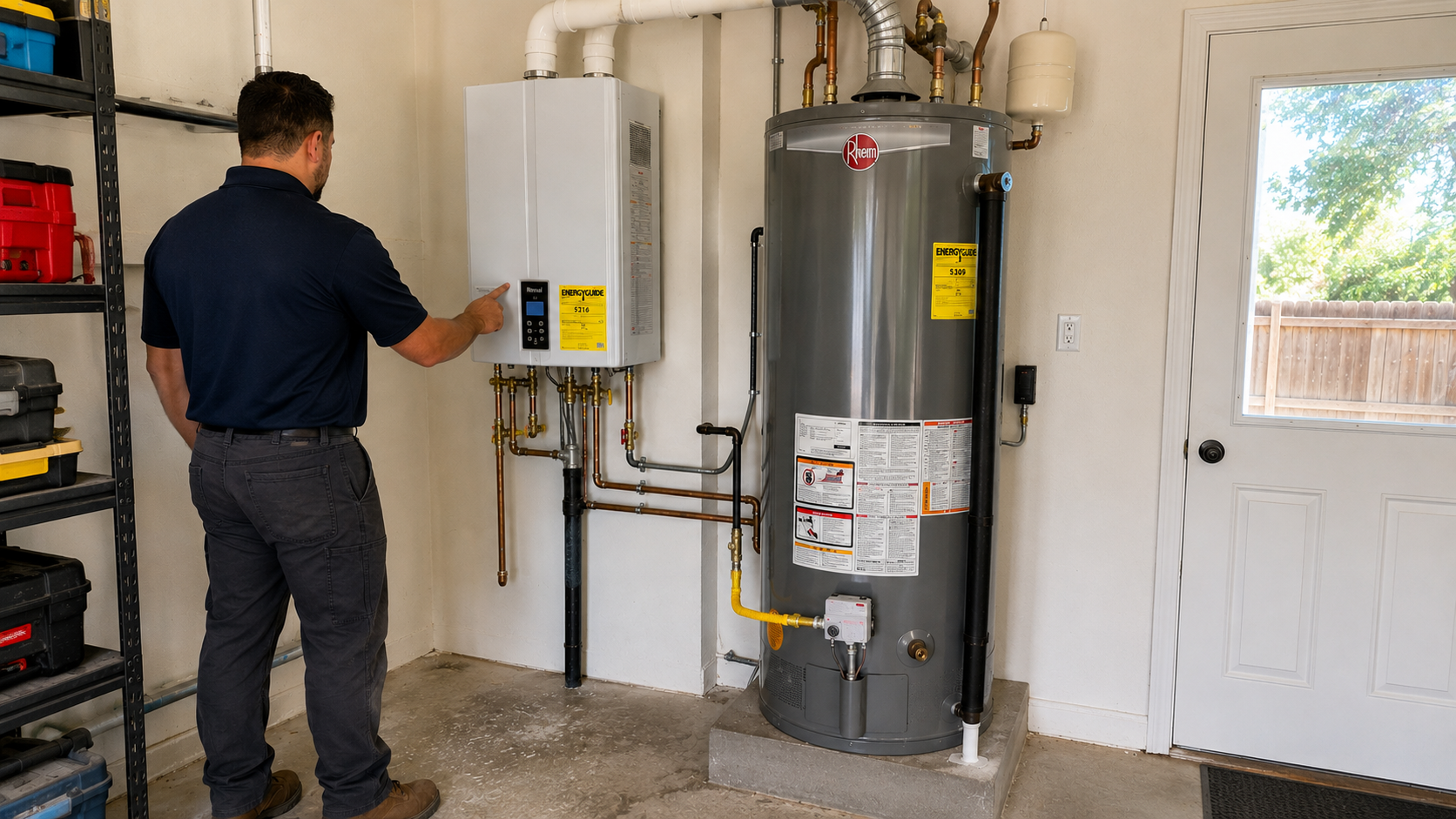

Shopping for a new water heater is not something most homeowners do often. It is easy to feel lost the moment you start comparing options. This water heater buying guide breaks down the real differences between tankless and traditional units, without the sales pitch. At Dutchman Drains & Plumbing, we install and repair both types across Merced every week. The right choice usually comes down to a few practical factors most people never think to ask about.
Traditional Tank Water Heaters: The Basics
A traditional water heater stores 40 to 50 gallons of hot water in a tank. That water stays ready to use at any moment, heated continuously so the temperature holds steady even when nobody is using it.
This design has been the standard for decades, and for good reason. Traditional tanks cost less upfront and are simpler to install. That matters if your budget is tight, or if your existing setup already fits a tank system.
Where Traditional Tanks Fall Short
The tradeoff is standby heat loss. Because the tank keeps water hot around the clock, energy gets used even when you are asleep or at work.
Traditional tanks also have a hard limit. Once the hot water runs out, everyone waits for a refill. In a busy household running showers, laundry, and dishes back to back, that limit shows up fast.
Tankless Water Heaters: How They Work
A tankless unit heats water on demand, directly as it flows through the system. There is no storage tank sitting around losing heat.
This means hot water never technically runs out, as long as the unit is sized correctly for your home. That single feature is why so many Merced homeowners upgrade to tankless. Nobody wants to run out of hot water mid shower, year after year.
The Real Cost Picture
Tankless units cost more upfront. Once installation is factored in, that price is often two to three times a traditional tank. Gas line upgrades and venting changes can add to that number, depending on your home's existing setup.
However, tankless systems typically last 20 years or more, nearly double the lifespan of a traditional tank. Over time, the higher upfront cost often balances out against fewer replacements and lower monthly energy use.
What Actually Matters When Choosing Between the Two
Price matters, but it should not be the only factor. A few questions determine which system actually fits your household better than any online comparison chart.
* How many people live in the home, and how much hot water do you use daily?
* Do you run multiple hot water appliances at the same time, like a shower and washing machine?
* Is your current gas line and electrical setup ready for a tankless unit, or would it need upgrades?
* How long do you plan to stay in the home?
* Is your priority lower monthly bills or lower installation cost right now?
If you answered that your household frequently runs out of hot water, tankless is worth the investment. But if your home is smaller, or you plan to sell within a few years, a traditional tank often makes more sense financially.
What We See on the Job in Merced
Merced homes built in the 1970s and 1980s often have older electrical panels. Those panels were never designed for a tankless system's power draw. That is not something homeowners think to check before shopping. It ends up being one of the most common surprises during installation.
Water hardness in this area also plays a bigger role than most people expect. Both tank and tankless units need more frequent maintenance here than in areas with softer water. Mineral buildup speeds up wear on internal components either way.
A Common Misconception We Hear Often
Many homeowners assume tankless units require zero maintenance because there is no tank to worry about. That is simply not true. Tankless systems need annual flushing to clear mineral buildup. Skip that step with Merced's water hardness, and efficiency drops noticeably within a year or two.
Sizing Your Water Heater Correctly
Getting the size wrong is one of the most expensive mistakes homeowners make, in both directions. An undersized tank runs out constantly, while an oversized tankless system costs more than necessary without meaningful benefit.
For traditional tanks, a household of two to three people typically needs 40 gallons. Four to five people usually need 50 gallons. Larger households or homes with soaking tubs may need 65 gallons or more.
Tankless sizing works differently, based on flow rate rather than volume. A unit needs enough gallons per minute capacity to handle your home's peak simultaneous demand, not just a single shower.
Rebates and Incentives Worth Checking
Before you settle on a price, check whether your unit qualifies for any rebates. Utility companies in the Central Valley periodically offer rebates for high efficiency water heaters, including certain tankless models.
Federal tax credits also apply to some energy efficient units, though the amount and eligibility change from year to year. It is worth asking your installer which models qualify before you finalize your purchase. Not every tankless unit automatically counts as high efficiency.
These incentives can shrink the price gap between tank and tankless more than most homeowners expect going in. Sometimes a unit that looked out of reach on price alone becomes a much closer call once rebates enter the picture.
Installation Timeline and What to Expect
A straightforward tank replacement, same type and same location, usually takes half a day. Switching from tank to tankless takes longer, often a full day or more, because of the gas line and venting work involved.
Permits are required for both types of installation in Merced. Skipping this step is not just a compliance issue. It can also create real problems if you try to sell your home later and the buyer's inspector flags unpermitted work.
Frequently Asked Questions
Is a tankless water heater worth the extra cost?
For most households that regularly run out of hot water, yes. The higher upfront cost typically pays off over time. Between the longer lifespan and lower monthly energy use, it adds up fast in homes with three or more people.
How long does a traditional water heater last compared to tankless?
Traditional tank water heaters typically last 10 to 12 years. Tankless units often last 20 years or more with proper annual maintenance, which is roughly double the lifespan.
Do I need to upgrade my electrical panel for a tankless water heater?
It depends on your home's existing setup and the specific unit you choose. Many older Merced homes need panel upgrades to support a tankless system's power draw. That is why a proper inspection before installation matters so much.
How often should I flush my tankless water heater?
Once a year is standard. Homes with harder water, which is common around Merced, may benefit from flushing every six to eight months instead, to keep mineral buildup from reducing efficiency.
Can I install a tankless water heater in the same spot as my old tank?
Sometimes, but not always. Tankless units often require different venting and gas line setups than tank systems. That means the existing location does not always work without modifications.
What size water heater do I need for a family of four?
Most families of four do well with a 50 gallon traditional tank. For tankless, look for a unit rated to handle your home's peak simultaneous hot water demand. The right size depends on how many hot water fixtures typically run at once.
Whether you are leaning toward tankless or sticking with a traditional tank, sizing and installation matter more than the brand name on the unit. Book a consultation with Dutchman Drains & Plumbing. We will walk through your home's actual hot water needs before you spend a dollar.

Read our latest blog & articles


.webp)


